
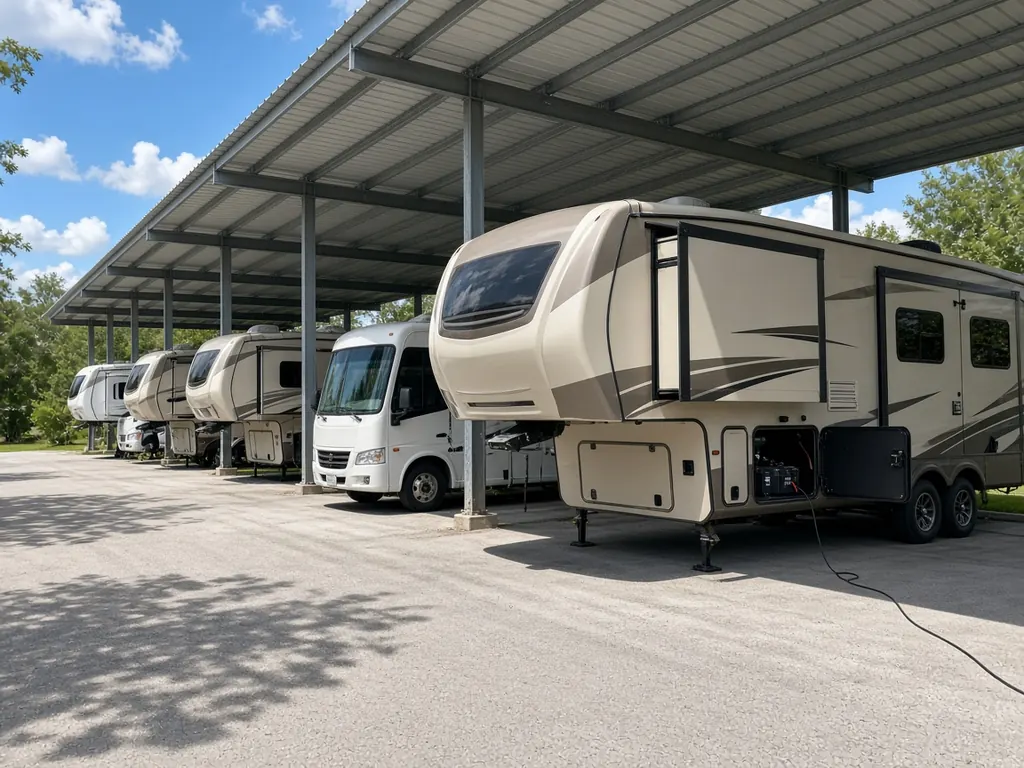
Florida is unusual. A lot of RVs here spend the summer parked, either because their owners went north or because it is just too hot to camp. Batteries that sit in a hot compartment, slowly drained by small loads, are often finished by October.
Before storage
- Charge the batteries fully.
- Check water levels on flooded batteries and top up with distilled water.
- Use the battery disconnect, or pull the negative cable, to stop parasitic draws. Some RVs still have loads ahead of the disconnect, and we can check for that.
- If the storage spot has power, set up a proper maintainer or leave the converter on, if it is a smart multi-stage charger.
- For lithium, follow the maker's storage advice. Most do well stored partly charged and disconnected.
Wake-up after storage
We test every battery, recharge or replace as needed, and check that the converter and solar are charging. If the RV is in a storage lot, we can often meet you there, or work with the lot's rules.
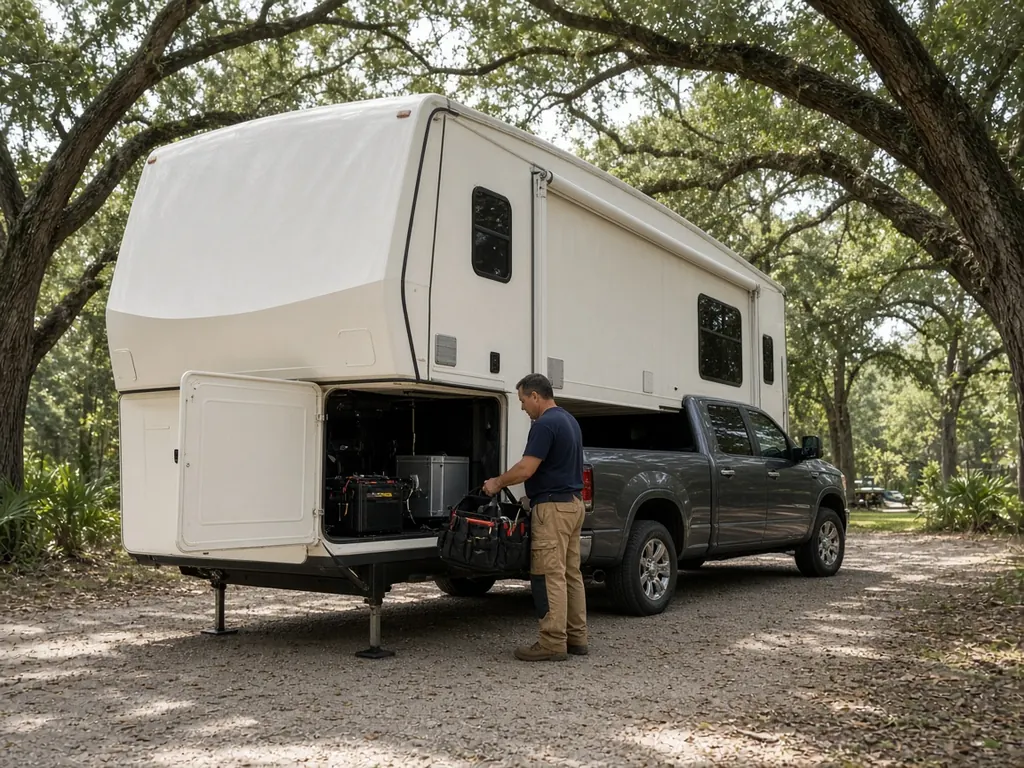
Snowbirds
If you arrive for the winter and the RV has been parked since April, a battery visit is a good first stop. Our storage guide has the details.
Hurricane season
From June through November, RV owners near the coast want batteries ready to go on short notice. See hurricane season battery prep.
Questions we get about this
Is it OK to leave my RV plugged in all summer?
With a modern smart converter, often yes. With an older single-stage converter, it can overcharge and dry out flooded batteries. We can tell you which you have.
Will a solar panel keep the batteries charged in storage?
A properly set up solar system often can, if the panels get sun and the controller is set right. Under a covered canopy, solar won't help much.