
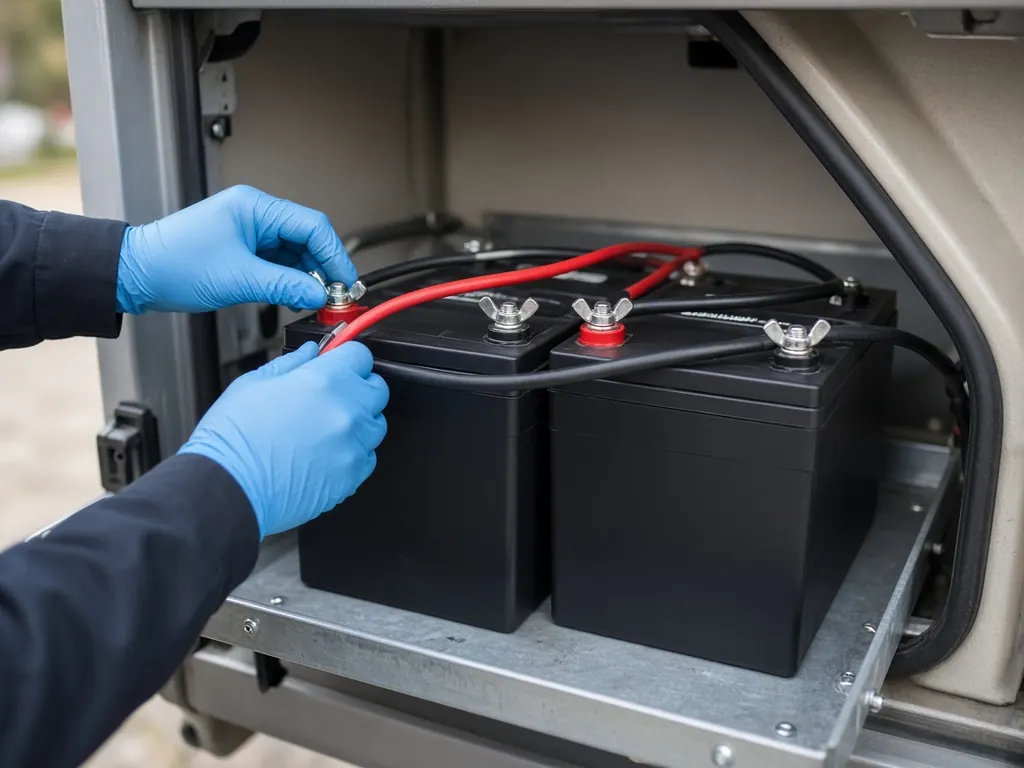
RV house systems run on 12 volts. You can get there two ways.
Two 6-volt batteries in series
Connect the positive of one 6-volt battery to the negative of the other, and you have 12 volts at the same amp-hour capacity as one battery. This is the classic "golf cart battery" setup.
Pros: 6-volt deep-cycle batteries are built for deep cycling and often have thick plates. Many RVers find they hold up well. Cons: If one fails, you have no 12-volt power until it is replaced. They are tall, so they may not fit every compartment.
12-volt batteries in parallel
Connect positive to positive and negative to negative, and you keep 12 volts while adding capacity.
Pros: If one fails, you can disconnect it and keep running on the other. Many sizes available. Cons: Wiring must be balanced so batteries share load evenly.
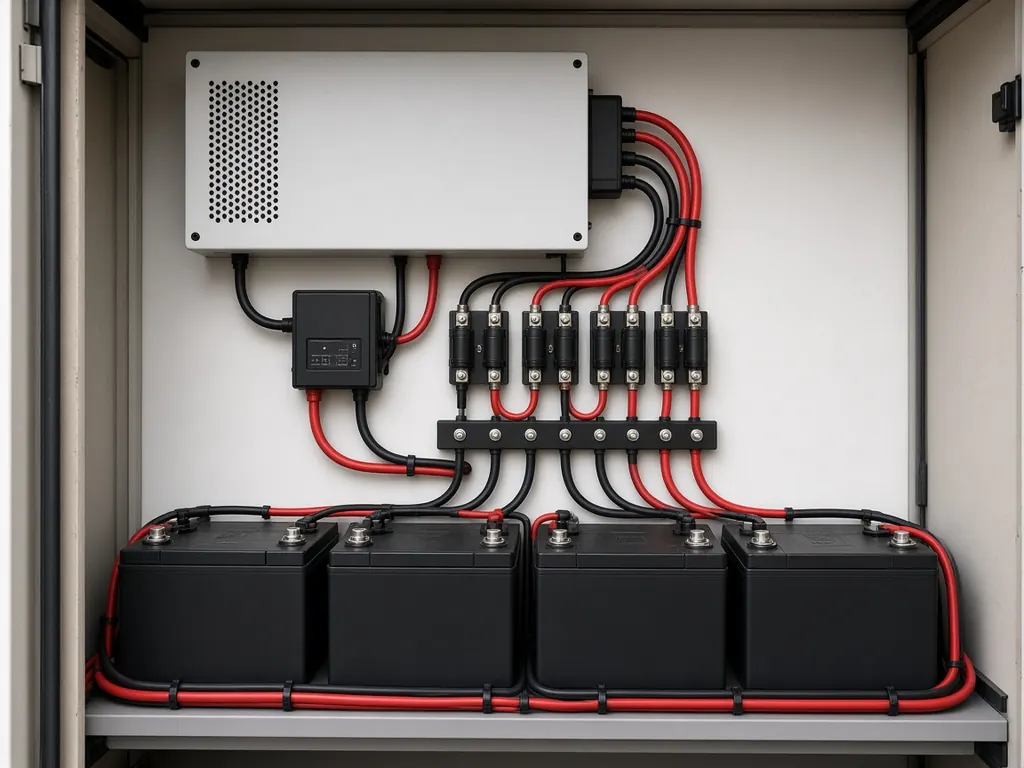
Wiring matters
Use correct cable size and equal-length cables, and for parallel banks connect the main positive and negative at opposite ends of the bank so the batteries share the load. Bad wiring is a common reason one battery in a bank wears out first.
Lithium
Most lithium RV batteries are 12-volt and are wired in parallel. Mixing 6-volt lead-acid and lithium in one bank is a no.
Our take
Both are good. Choose based on space, budget and how you camp. We can install either. See RV battery replacement.