
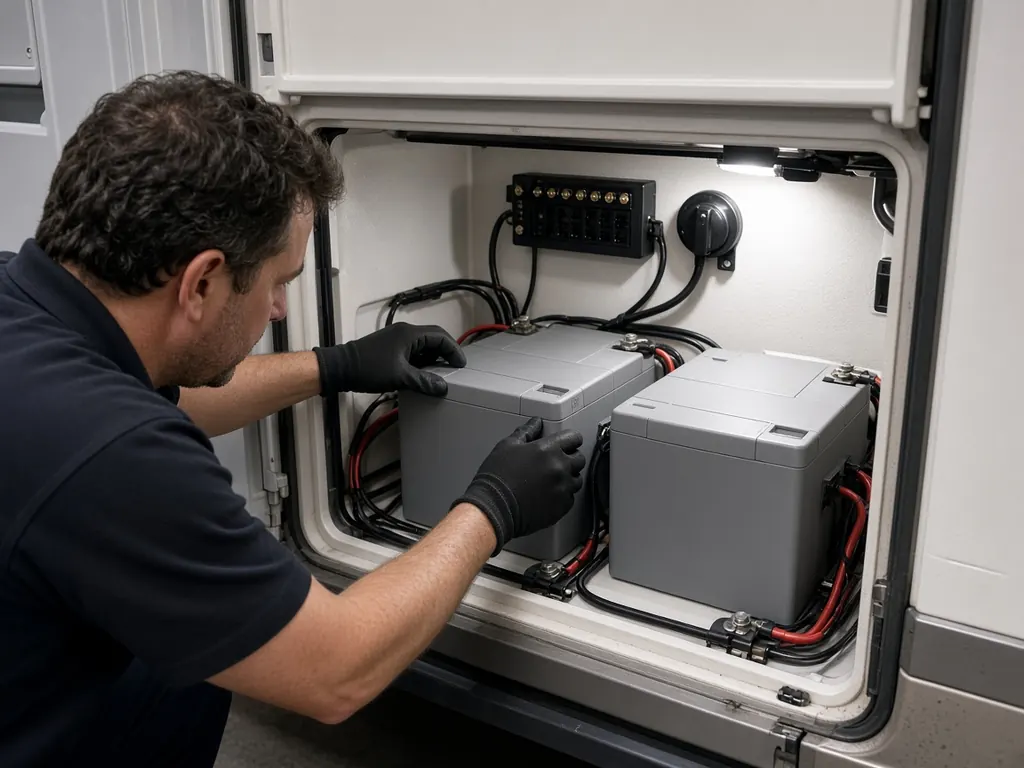
The short comparison
| Flooded lead-acid | AGM | Lithium (LiFePO4) | |
|---|---|---|---|
| Upfront cost | Lowest | Middle | Highest |
| Usable capacity | Roughly half of rated, for good life | Roughly half of rated | Most of rated |
| Weight | Heavy | Heavy | Much lighter |
| Maintenance | Watering, cleaning | None | None |
| Venting | Gives off hydrogen when charging | Sealed (vents only if badly overcharged) | Sealed |
| Charging | Lead-acid profile | AGM profile | Lithium profile |
| Cold charging | Fine | Fine | Most need heat or protection below freezing |
| Heat | Shortens life | Shortens life | Generally tolerates heat better, within limits |
These are general patterns. Individual batteries vary, so check each maker's specs.
Flooded lead-acid
The traditional RV battery, including 6-volt golf-cart batteries. Lowest cost, lots of capacity for the money. They need distilled water topped up and a ventilated space. Good for owners who don't mind maintenance. See watering and safety.
AGM
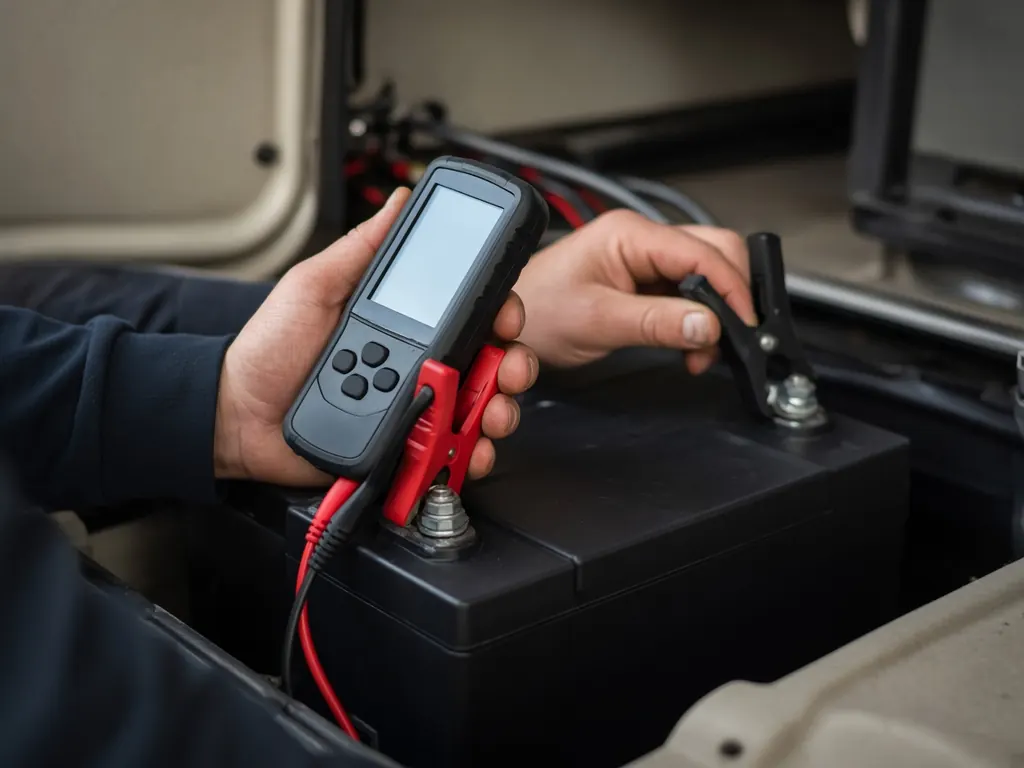
Sealed, no watering, handles vibration well. Costs more than flooded. A good choice for owners who want no maintenance and mostly camp with hookups. See AGM service.
Lithium (LiFePO4)
Most usable capacity, lightest weight, longest cycle life, no maintenance, steady voltage. Highest upfront cost, and the charging system must suit it. Most can't be charged below freezing unless heated or protected. See lithium upgrades.
Florida considerations
Heat is the big one. Lead batteries lose life faster in hot compartments. Lithium generally holds up better, though very high temperatures still matter. Cold is a minor factor in South Florida but real in the Panhandle and North Florida.
Our usual advice
Always plugged in at an RV resort? A good AGM or flooded bank may be all you need. Dry camping, running an inverter, or tired of replacing batteries every few summers? Lithium often makes sense over time.