
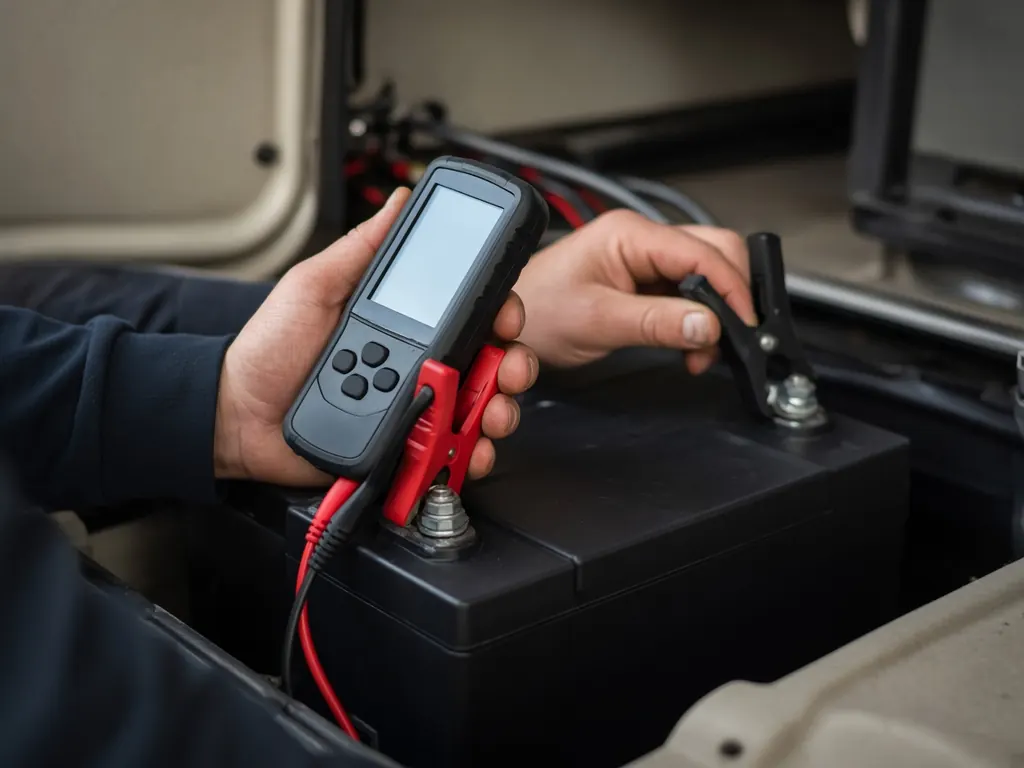
There is no single number. Battery life depends on the battery type, how deeply you drain it, how you charge it, and heat. In general, lead-acid batteries in hot climates don't last as long as they do in cooler ones. Many Florida RVers find their lead-acid house batteries need replacing sooner than they expected.
What shortens battery life
- Heat. Higher temperatures speed up the chemical reactions that wear batteries out. Battery compartments in direct sun get much hotter than the air.
- Deep discharges. Regularly draining lead-acid batteries very low shortens their life.
- Sitting discharged. A lead-acid battery left partly or fully discharged sulfates.
- Low water in flooded batteries.
- Overcharging, often from old converters on long stays plugged in.
- Vibration and loose hold-downs.
Signs your batteries are failing
Lights dim faster than they used to. Slides or jacks slow down. The batteries won't last the night off hookups. Voltage drops quickly under load. Swollen cases, a rotten-egg smell, or heavy corrosion.
Getting more years
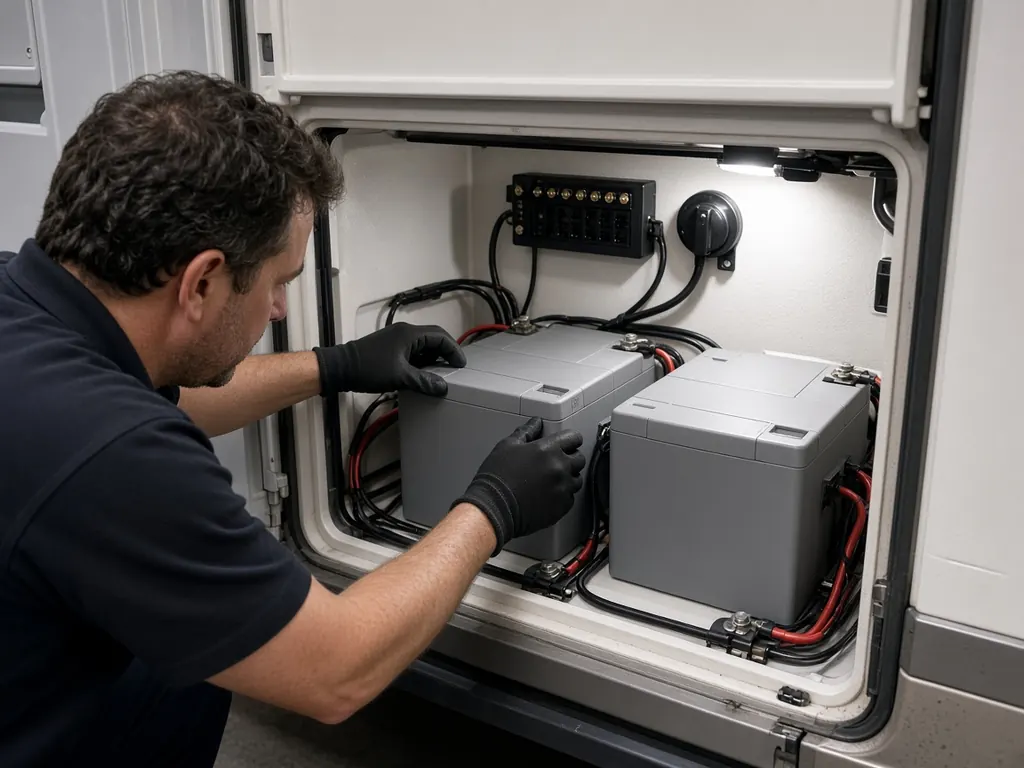
Keep batteries charged. Avoid deep drains on lead-acid. Check water on flooded batteries regularly. Use the disconnect in storage. Make sure chargers are set for your battery type. Shade the compartment if you can.
Lithium in heat
LiFePO4 batteries generally tolerate heat better than lead-acid, and they don't sulfate. Very high temperatures still matter, so follow the maker's limits.