
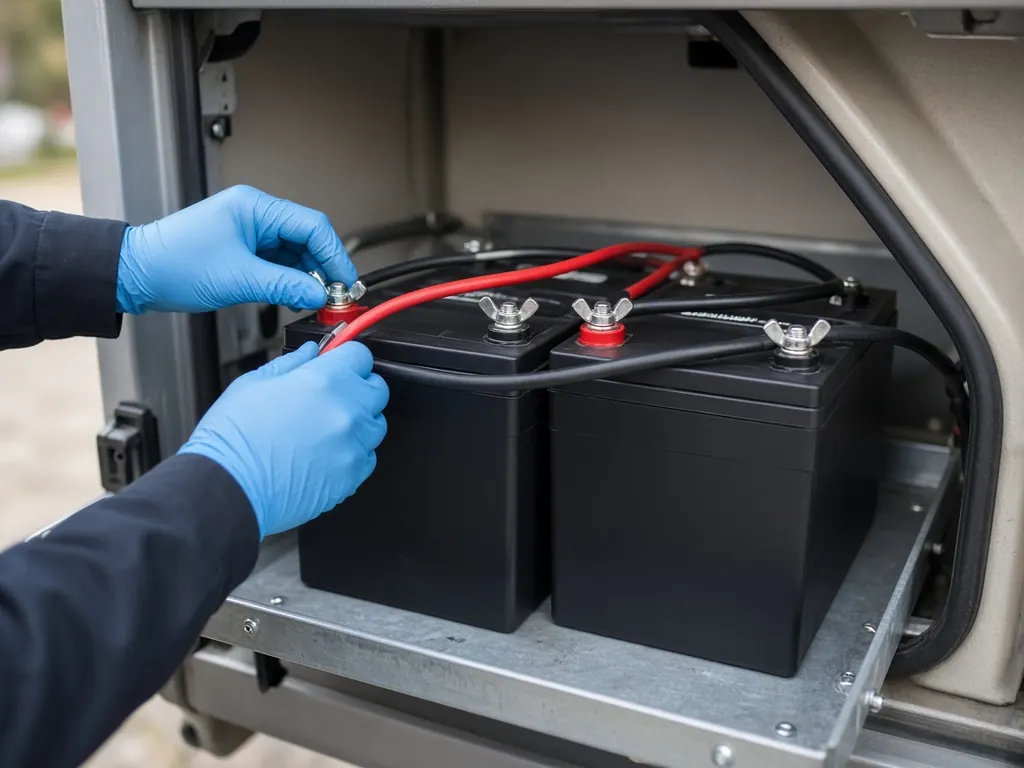
Safety basics
- Eye protection and gloves. Battery acid is corrosive.
- No sparks or flames. Flooded batteries give off hydrogen while charging, which can ignite.
- Ventilation. Flooded battery compartments need venting.
- Tools. A wrench that bridges both terminals can weld itself, burn you, or damage the battery.
- Disconnect order. When removing, disconnect negative first. When installing, connect negative last.
- Lithium. Don't open, puncture or modify lithium batteries. Use proper fusing.
Watering flooded batteries
Flooded lead-acid batteries lose water as they charge. In Florida heat they lose more.
- Charge the battery first. Electrolyte level rises during charging, so adding water to a discharged battery can lead to overflow.
- Remove the caps and check each cell.
- Add distilled water only until it covers the plates and reaches the level the maker recommends, often just below the fill well. Don't overfill.
- Replace the caps and wipe up any spills.
How often depends on use, heat and charging. Check monthly at first and adjust.
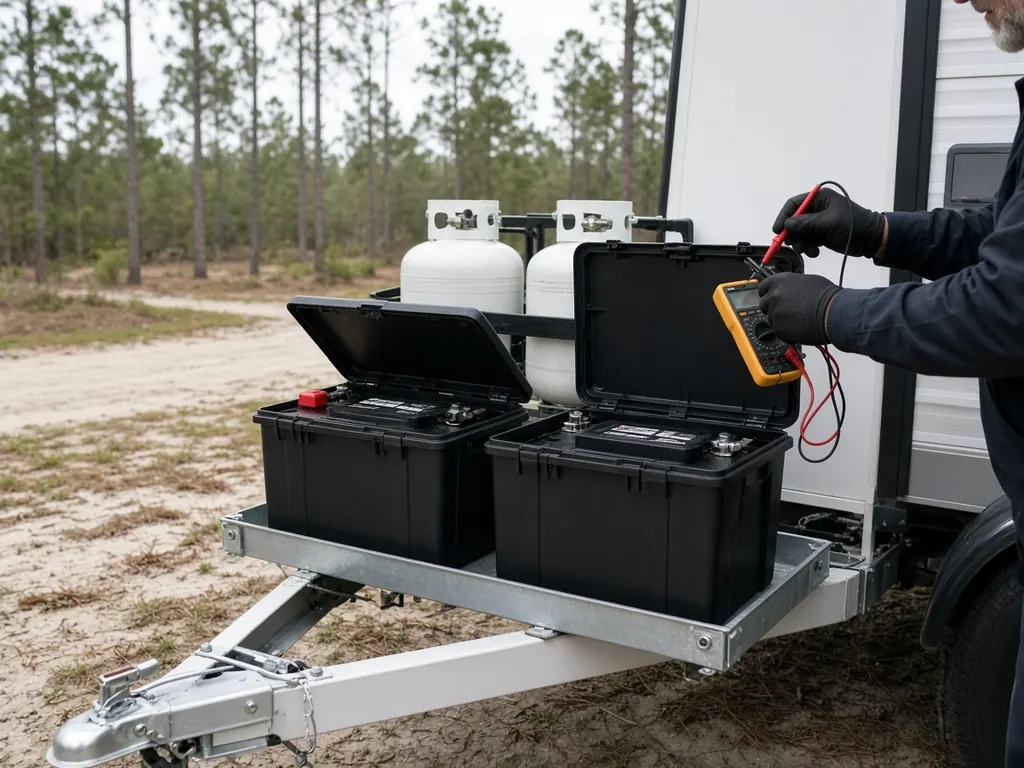
Cleaning terminals
A baking soda and water solution neutralizes acid residue. Rinse, dry and apply terminal protectant.