
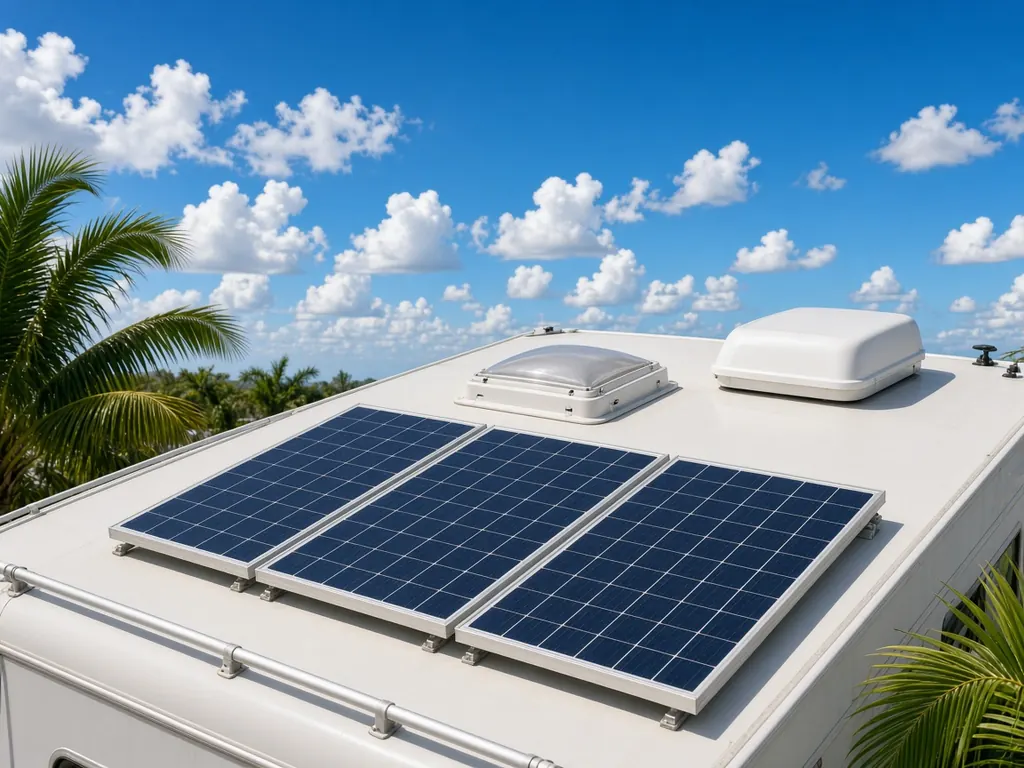
The parts
- Panels turn sunlight into DC power.
- Charge controller regulates that power into the batteries. MPPT controllers are generally more efficient than PWM controllers, especially with higher-voltage panel arrays.
- Batteries store the energy.
- Inverter (optional) turns battery power into 120-volt AC.
- Battery monitor (recommended) shows real state of charge.
Controller settings
The controller should be set to your battery type: flooded, AGM or lithium, or custom voltages from the battery maker. A controller set for flooded batteries can overcharge AGM, and one set for lead-acid can undercharge lithium.
Florida sun
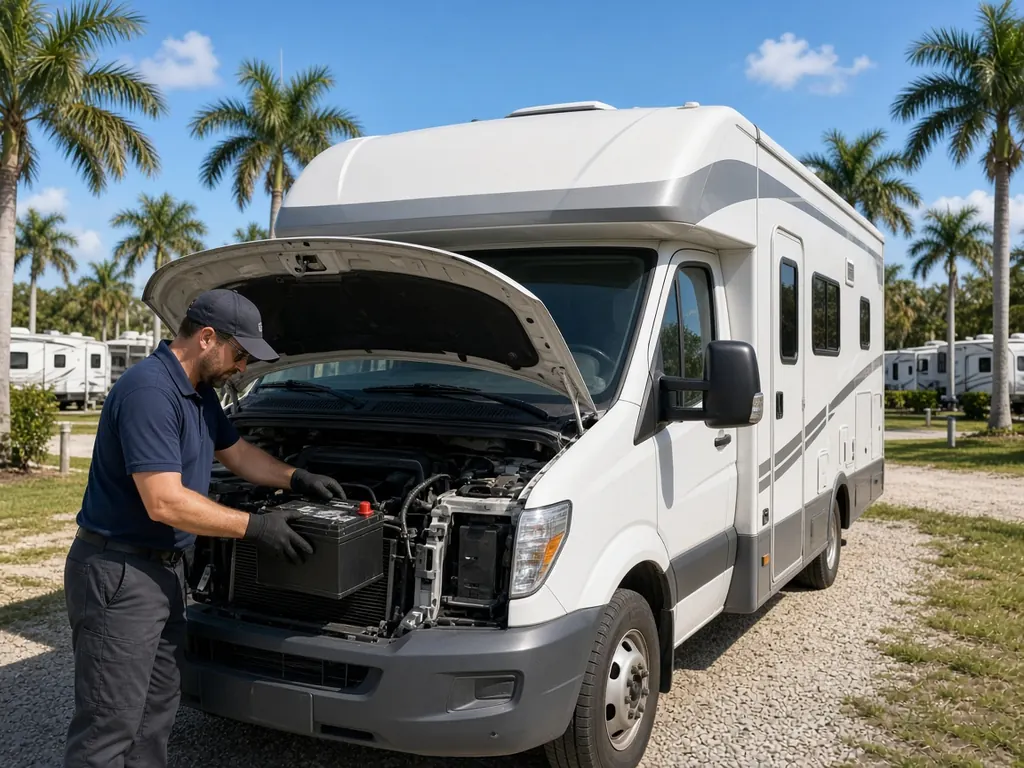
Florida gets good sun, but summer afternoon thunderstorms, haze and shade from oaks at many campgrounds cut solar output. Panels on a hot roof also produce somewhat less than in cooler weather.
Matching panels and batteries
Start with how much power you use in a day, then size batteries to cover that (plus a cushion), and panels to recharge it. Lithium is popular with solar because it charges efficiently and you can use most of its capacity. See boondocking battery sizing.
What we do
We handle the battery side: banks, controller settings, inverter battery wiring and monitors. See solar and inverter battery work.