

How to measure
Use a digital multimeter set to DC volts. Touch the red lead to the positive terminal and the black to the negative. For a 6-volt pair, measure across the whole bank for 12-volt readings, and each battery separately to compare.
Resting voltage
Voltage is most useful when the battery has rested, with no charging or loads, for a few hours. Right after charging, voltage reads high. Under load, it reads low.
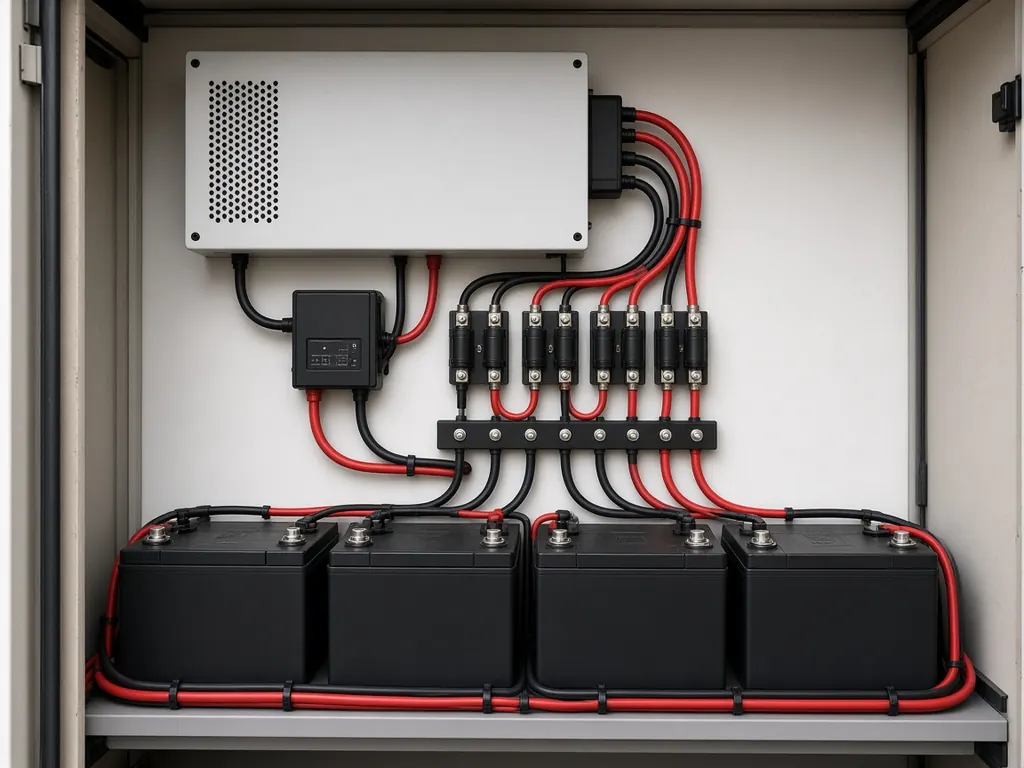
Lead-acid rough guide
For a 12-volt lead-acid battery at rest, roughly 12.6 to 12.7 volts is around full, about 12.2 is around half, and below about 12.0 is low. These are approximate and vary by battery type and temperature. Check your battery maker's chart.
Lithium is different
LiFePO4 batteries hold a fairly flat voltage across most of their charge, so voltage alone is a poor indicator of how full they are. A shunt-based battery monitor or the battery's own Bluetooth app is more useful.
Limits of voltage
A worn-out battery can show normal resting voltage and still collapse under load. Voltage tells you charge, not capacity. A load or conductance test is needed for condition. See battery testing.
Safety
Keep tools away from bridging terminals. Wear eye protection around flooded batteries.