
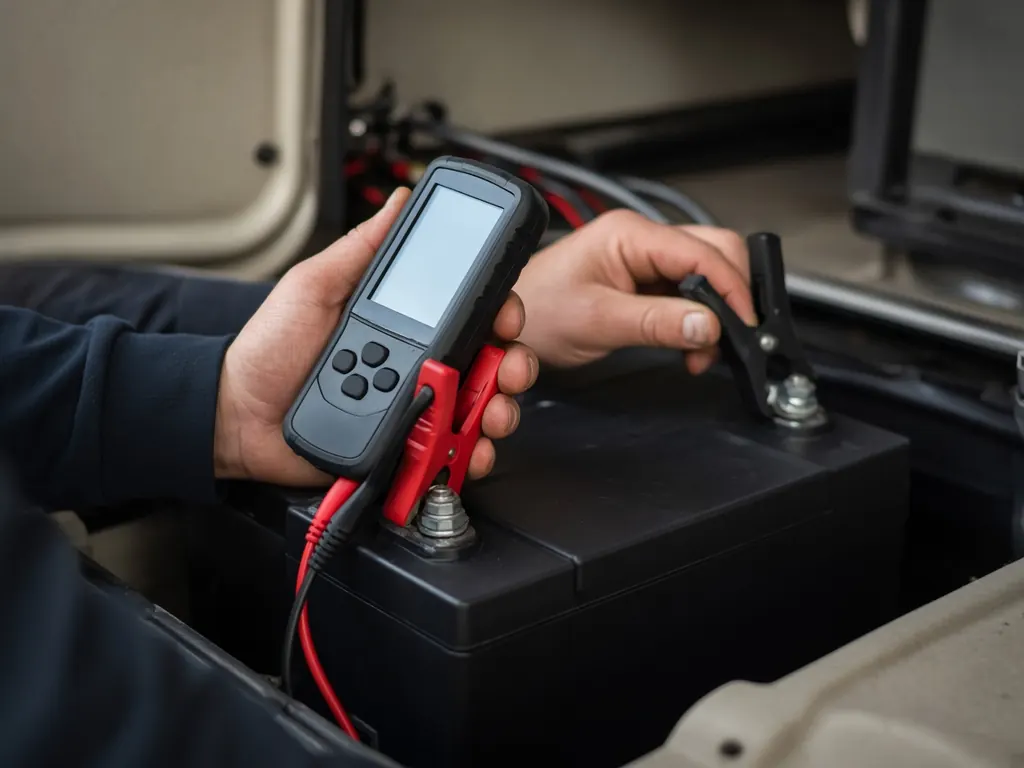
A battery that dies once might just have been run down. A battery that keeps dying has a reason. Here are the most common, roughly in the order we find them.
1. Parasitic draws
Even with "everything off," most RVs draw power: propane and CO detectors, stereo memory, control boards for the fridge, furnace and water heater, USB outlets, and the inverter if it is left on. These small loads can empty a battery in days to a couple of weeks. The battery disconnect switch stops most of them, but on some RVs a few loads are wired ahead of it.
2. The converter stopped charging
When you plug in, the converter (or inverter-charger) should charge the house batteries. Converters fail, especially after power surges at campground pedestals. If your batteries die even while you're plugged in, suspect this first.
3. Old or damaged batteries
A battery that has been drained deep many times, run low on water, or left discharged in heat loses capacity. It might still show normal voltage when resting, but collapse under load.
4. Inverter left on
An inverter on standby draws power. Big inverters draw more. Leaving it on overnight or in storage drains the bank.
5. Solar set wrong
A solar charge controller set for the wrong battery type, or a panel shaded all day, can leave batteries undercharged.
6. Alternator or isolator problems
On motorhomes, if the house batteries don't charge while driving, it may be the isolator, solenoid, or DC-to-DC charger.
7. A short or bad ground
Less common, but a chafed wire or corroded ground can drain batteries quickly.
What to do
Testing finds the cause. We check every battery, the converter, solar, alternator charging and draws. Then you only replace what is actually bad. See also how to check RV battery voltage.