
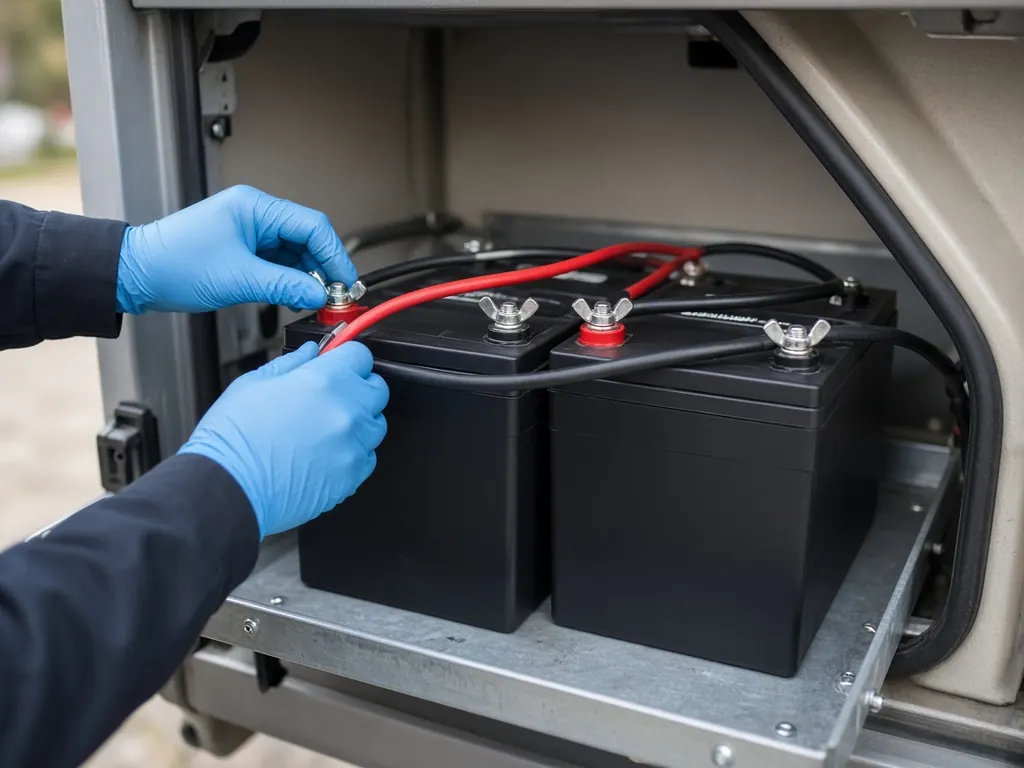
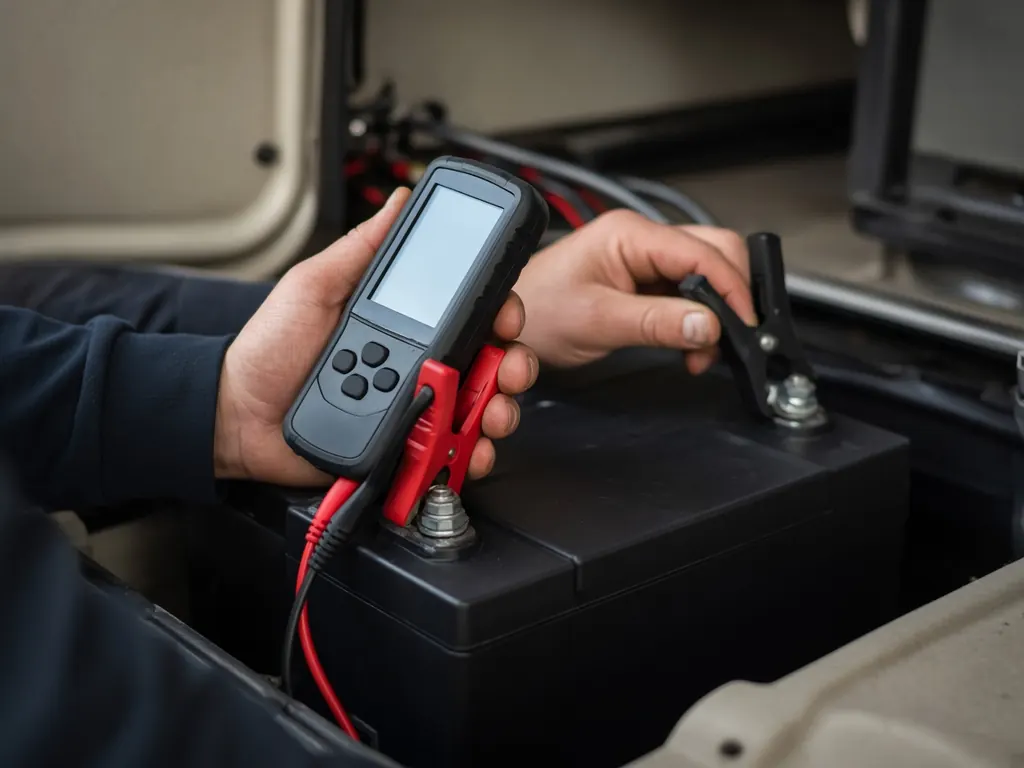
Every RV battery replacement starts with the same question: which batteries are actually bad? A motorhome has at least two separate systems. A travel trailer or fifth wheel has the house batteries, plus a tow vehicle with its own starting battery. Replacing the wrong one costs you money and fixes nothing, so we test first.
House (coach) batteries
These run the 12-volt side of the RV: lights, the water pump, fans, the fridge control board, the furnace blower, slide-out motors, leveling jacks and anything running off an inverter. Common setups are one or two 12-volt batteries in parallel, or pairs of 6-volt golf-cart style batteries wired in series to make 12 volts. Bigger coaches can have four, six or more.
House batteries usually fail slowly. They hold less charge each season until the lights dim by morning, or the slides stall halfway out. In Florida the heat speeds this up. See how long RV batteries last in Florida.
Chassis (starting) batteries
On a motorhome, the chassis battery cranks the engine. Gas Class A and Class C motorhomes usually have one, sometimes two. Diesel pushers commonly use two or more large starting batteries to turn a big diesel. Our page on chassis battery replacement covers this side in detail.
What we install
For flooded lead-acid and AGM, we install Interstate batteries in the group sizes and voltages your RV uses. We match the battery to your tray, hold-down and cable reach, and to how you camp. A full-timer who dry camps needs something different from a weekend camper who is always on shore power. If you want to move up to lithium instead, see lithium upgrades.
How the replacement goes
- Test each battery and the charging system.
- Shut off the battery disconnect and shore power, and note how the bank is wired.
- Remove the old batteries, clean terminals and cable ends, and check for corrosion, melted insulation or loose grounds.
- Install the new batteries with correct series or parallel wiring, torque the connections and secure the hold-downs.
- Turn everything back on and confirm the batteries are charging from shore power, the generator, solar or the alternator.
- Take the old batteries for recycling.
When replacement isn't the answer
Sometimes the batteries are fine and something else is wrong. A converter that stopped charging, a disconnect left off, a blown fuse, or a parasitic draw that empties a good battery in two days. If that is what we find, we tell you, and you don't pay for batteries you don't need.
Questions we get about this
Should I replace all the house batteries at once?
Usually, yes. Batteries in a bank work together, and one new battery paired with old ones tends to be dragged down to their level. If one battery failed early from a defect, that can be an exception.
Can you match the batteries I have now?
Usually. Tell us or send a photo of the labels, and we will match the group size and voltage or suggest a better fit.
How long does a replacement take?
A simple swap of one or two batteries is often under an hour on site. Larger banks, tight compartments or corroded cables take longer.