
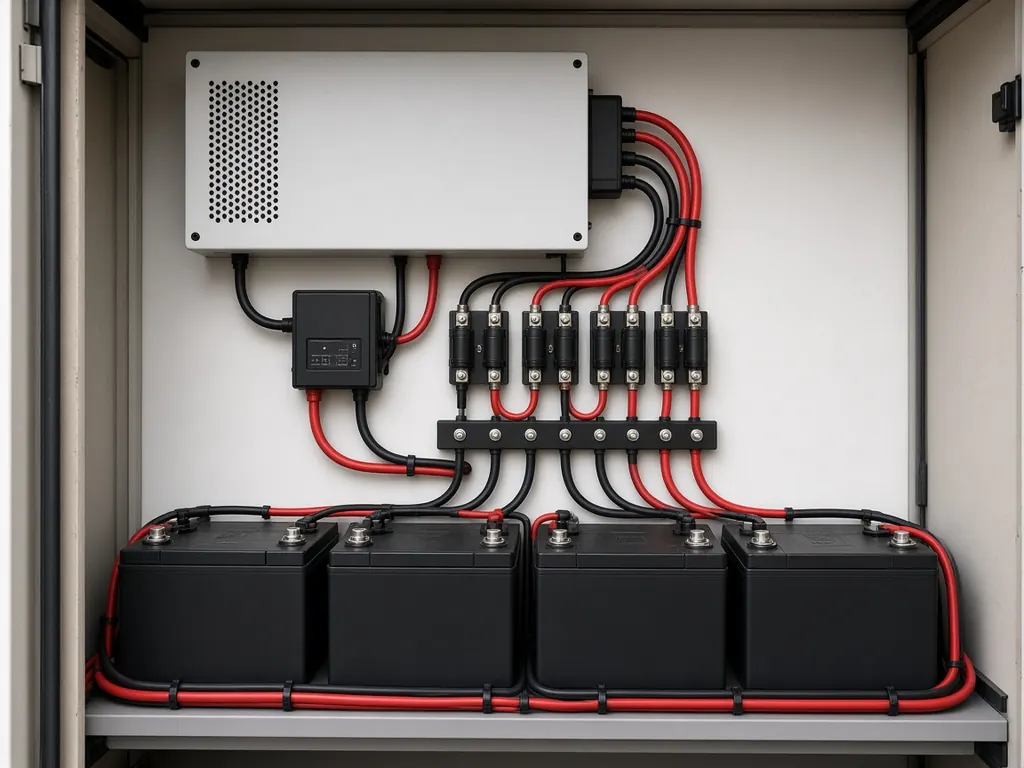
AGM stands for absorbed glass mat. The acid is held in fiberglass mats instead of sloshing loose, so the battery is sealed, doesn't need water and won't spill if tipped. For a lot of RV owners, that is the whole reason to buy one. No more checking water levels in a cramped compartment.
Why people choose AGM
- No watering. Flooded batteries need distilled water topped up regularly, especially in Florida heat. AGMs don't.
- Sealed. They don't vent acid fumes in normal use, which makes them a better fit for compartments that are not well ventilated. (Any lead battery can vent gas if badly overcharged.)
- Vibration. They handle road vibration well.
- Faster charging than flooded, in general.
What to watch
AGMs cost more than flooded batteries and still don't give you the deep usable capacity of lithium. They are also sensitive to overcharging. Your converter, solar controller and any inverter-charger should be set to an AGM charging profile. If it is still set for flooded, it may charge too high. We check this when we install.
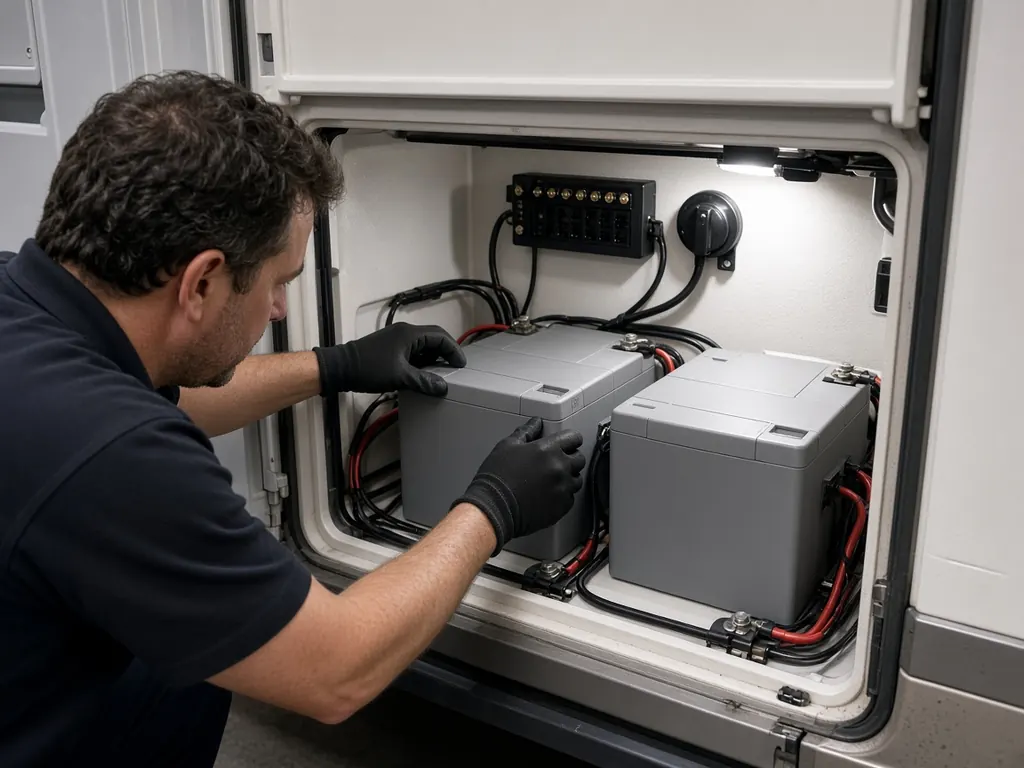
AGM in Florida
Heat is hard on every lead battery. AGMs tend to cope better than flooded batteries that are allowed to run low on water, but a hot compartment still shortens life. Keep them charged, keep them off long, deep drains, and read our Florida storage guide if the RV sits for summer.
Brands
We install Interstate AGM batteries. Our guides also cover Optima, Odyssey and Lifeline AGMs, which some owners already have.
Questions we get about this
Can I replace flooded batteries with AGM?
Yes, as long as the size fits and your chargers are set for AGM.
Do AGMs work as chassis batteries?
Yes. Many motorhome and tow vehicle starting batteries are AGM, especially on newer chassis with start-stop or heavy electrical loads.
Is AGM the same as gel?
No. Both are sealed, but gel batteries use a different design and need their own charging settings. Gel batteries are less common in RVs today.