
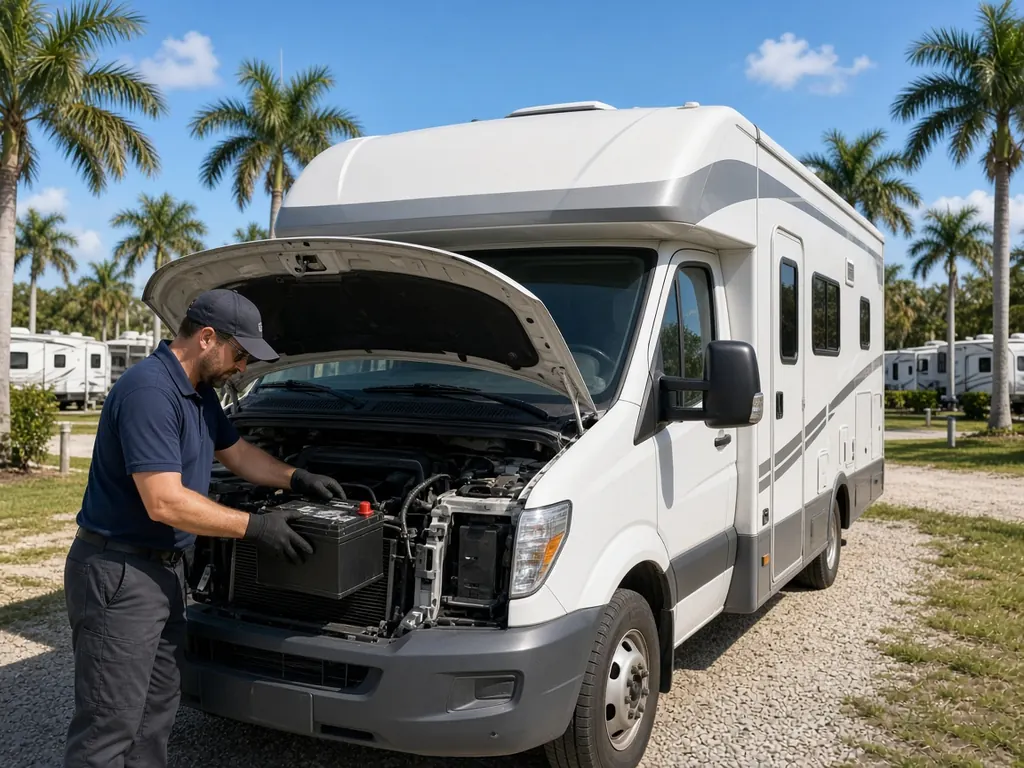
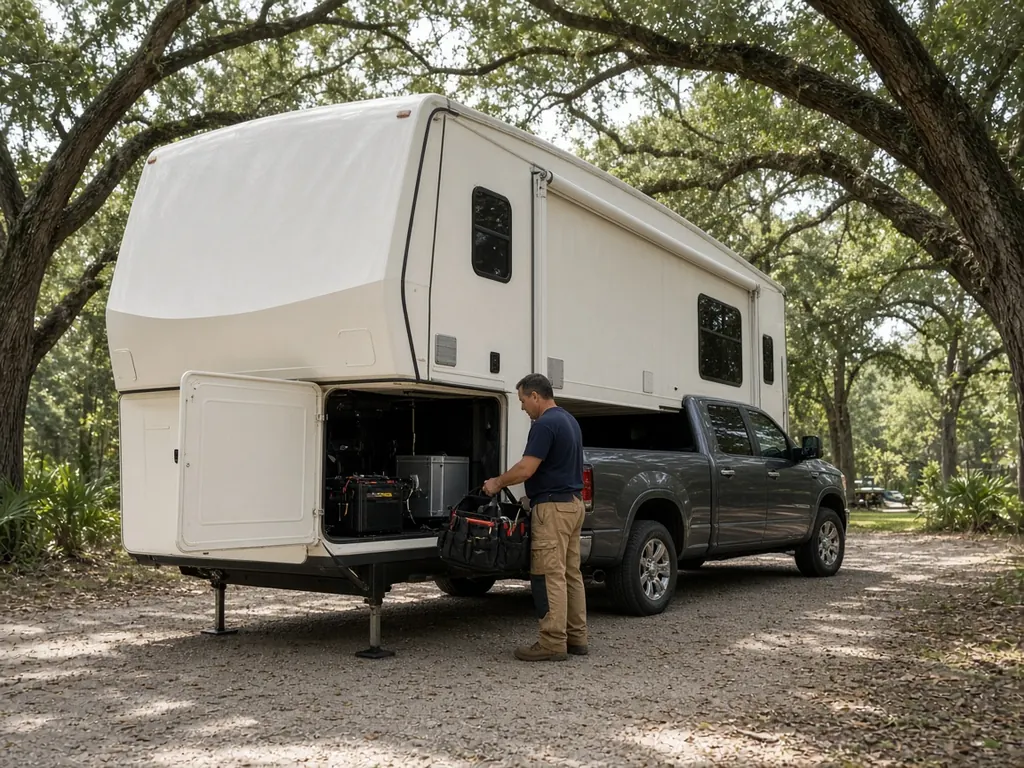
Every motorhome has two separate battery systems. Towables (travel trailers and fifth wheels) have a house system, and the tow vehicle has its own starting battery.
The house (coach) battery
Runs the RV's 12-volt living systems: lights, water pump, vent fans, furnace blower, fridge control board, slide-out motors, leveling jacks, entry steps, detectors, and anything on the inverter. It is a deep-cycle battery (or bank), built to be drained and recharged over and over.
The chassis (starting) battery
On a motorhome, it starts the engine and runs the dash, headlights and engine electronics. It is a starting battery, built to deliver a big burst of current for a few seconds.
Quick diagnosis
| What you notice | Likely culprit |
|---|---|
| Engine won't crank, but RV lights work | Chassis battery or its connections |
| Engine starts fine, but RV lights, pump and slides are dead | House battery, disconnect or main fuse |
| Nothing works anywhere | Both drained, or a shared problem like a bad boost solenoid |
| Works when plugged in, dies when unplugged | House batteries can't hold a charge |
How each one charges
House batteries charge from shore power (through the converter or inverter-charger), the generator, solar, and on motorhomes, usually from the alternator while driving.
Chassis batteries charge from the alternator. Some motorhomes also have a small circuit that tops up the chassis battery from shore power. Many don't, which is why chassis batteries die in storage even when the RV is plugged in.
The boost or aux start switch
Many motorhomes have a dash button that ties the house bank to the chassis battery temporarily to help start the engine. It only works if the house bank has charge. If it sticks on, it can drain both systems.
Still not sure?
Get it tested. Or read dead RV battery.