

Step 1: Estimate daily use
List what runs on battery and for how long. Use the device label or manual for watts or amps. For 12-volt devices, amp-hours (Ah) = amps × hours. For 120-volt devices on an inverter, roughly: amp-hours from a 12-volt battery ≈ (watts × hours) ÷ 12, plus inverter losses (often 10 to 15 percent).
Typical items: LED lights, water pump, vent fans, furnace blower, fridge control board, phone and laptop charging, TV, CPAP, and a residential fridge if you have one. The furnace blower and a residential fridge are often the biggest users.
Step 2: Choose battery type
- Lead-acid (flooded or AGM): for good life, plan to use about half the rated capacity. A 200 Ah bank gives roughly 100 Ah usable.
- Lithium: you can use most of the rated capacity. A 200 Ah lithium bank gives most of that.
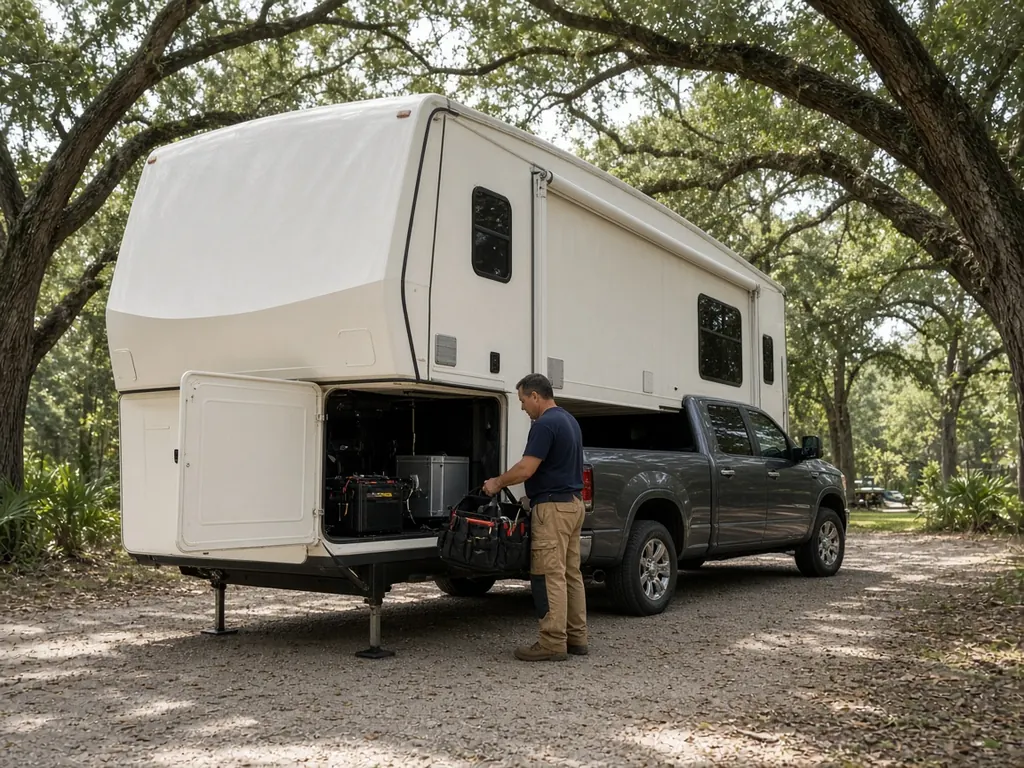
Step 3: Add margin
Cloudy days, hot nights with fans running, and aging batteries all reduce what you have. Plan for some extra.
Step 4: Plan recharging
Batteries only help if you can refill them: solar, generator, or alternator while driving. See solar basics.
Florida notes
In Florida, fans run a lot at night, and dry camping in summer without air conditioning is tough. Most Florida boondocking happens in the cooler months.
Get help
We can help you estimate and install the right bank. See lithium upgrades.