
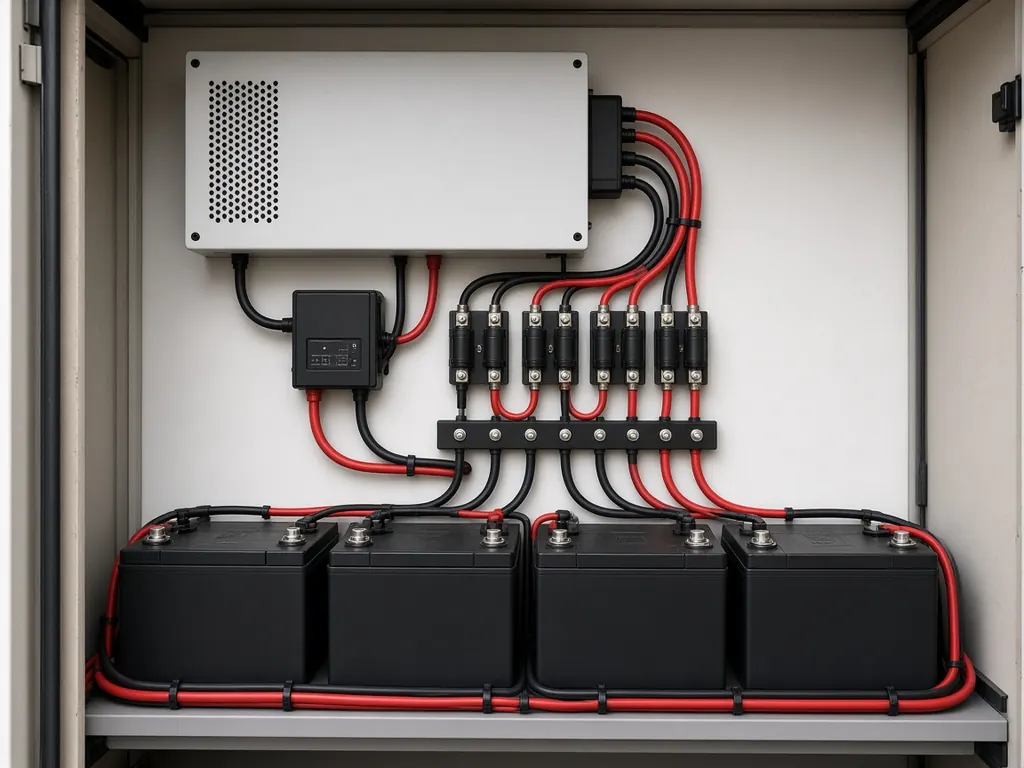
What a converter does
The converter takes 120-volt shore power or generator power and turns it into 12-volt DC to run the RV's 12-volt system and charge the house batteries. Some RVs have an inverter-charger instead, which does the same job plus turns battery power into 120-volt AC.
Why the type matters
Different battery types want different charging voltages and stages.
- Flooded lead-acid handles a fairly wide range, but long periods at too-high voltage boil off water, and too-low voltage leaves them undercharged.
- AGM is more sensitive to overcharging.
- Lithium (LiFePO4) typically wants a higher, steady charge voltage and no long "float" at lead-acid levels. Many lithium makers specify their own settings.
Older converters
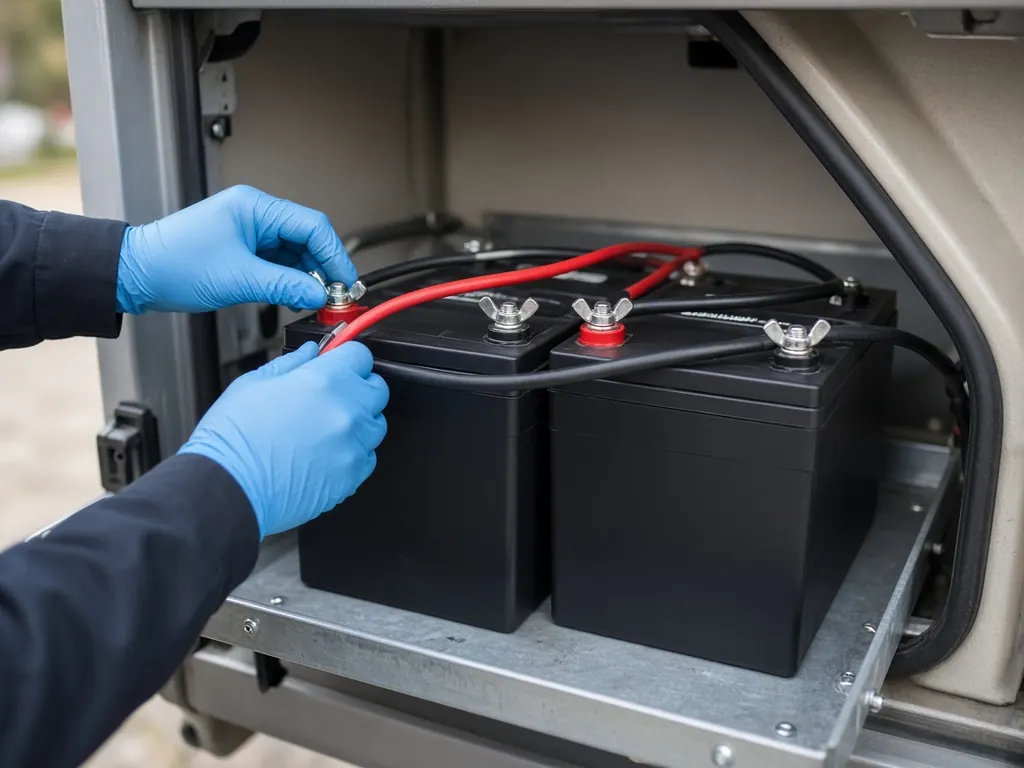
Many older RV converters are single-stage or have fixed lead-acid profiles. Some charge too low to fully charge lithium. Some hold a float voltage that is not ideal for lithium or that slowly dries out flooded batteries on long stays. Some newer converters have a lithium setting or switch. Some older units can be swapped for a lithium-compatible converter in the same housing.
Inverter-chargers and solar
Inverter-chargers usually have battery type settings. Solar charge controllers do too. After any battery change, both should be set to match the new batteries.
Alternator charging
On motorhomes, the alternator often charges the house batteries through an isolator or solenoid. Lithium can draw a lot of current from the alternator. A DC-to-DC charger limits and shapes that current.
What we check
The converter model and settings, actual output voltage, inverter-charger and solar settings, and the alternator charging path. Then we tell you what, if anything, needs to change. See lithium upgrades.